




Collision Repair for EVs and Hybrids: What's Different
High-voltage batteries, lightweight materials and heavy sensor use change how electric and hybrid vehicles are repaired. Here's what to expect and what to do after an EV collision.
Electric and hybrid vehicles are more common on Texas roads every year, and they bring new considerations when they're in a collision.
High-voltage safety comes first
EVs and hybrids carry high-voltage battery systems. Before work begins, technicians need to identify the system, follow the manufacturer's procedure to de-energize it, and protect the battery from heat and damage. That's why training matters. Our team holds IMI International Level 2 certification for working safely on electric and hybrid vehicles.
Repairs can cost more
Battery-electric vehicles tend to cost more to repair than gas vehicles. Mitchell data shows BEV repair severity running about $1,000 higher than comparable gas vehicles, and mild-hybrid claims rose 21% year over year in Q2 2025 (Autobody News).
Lightweight materials
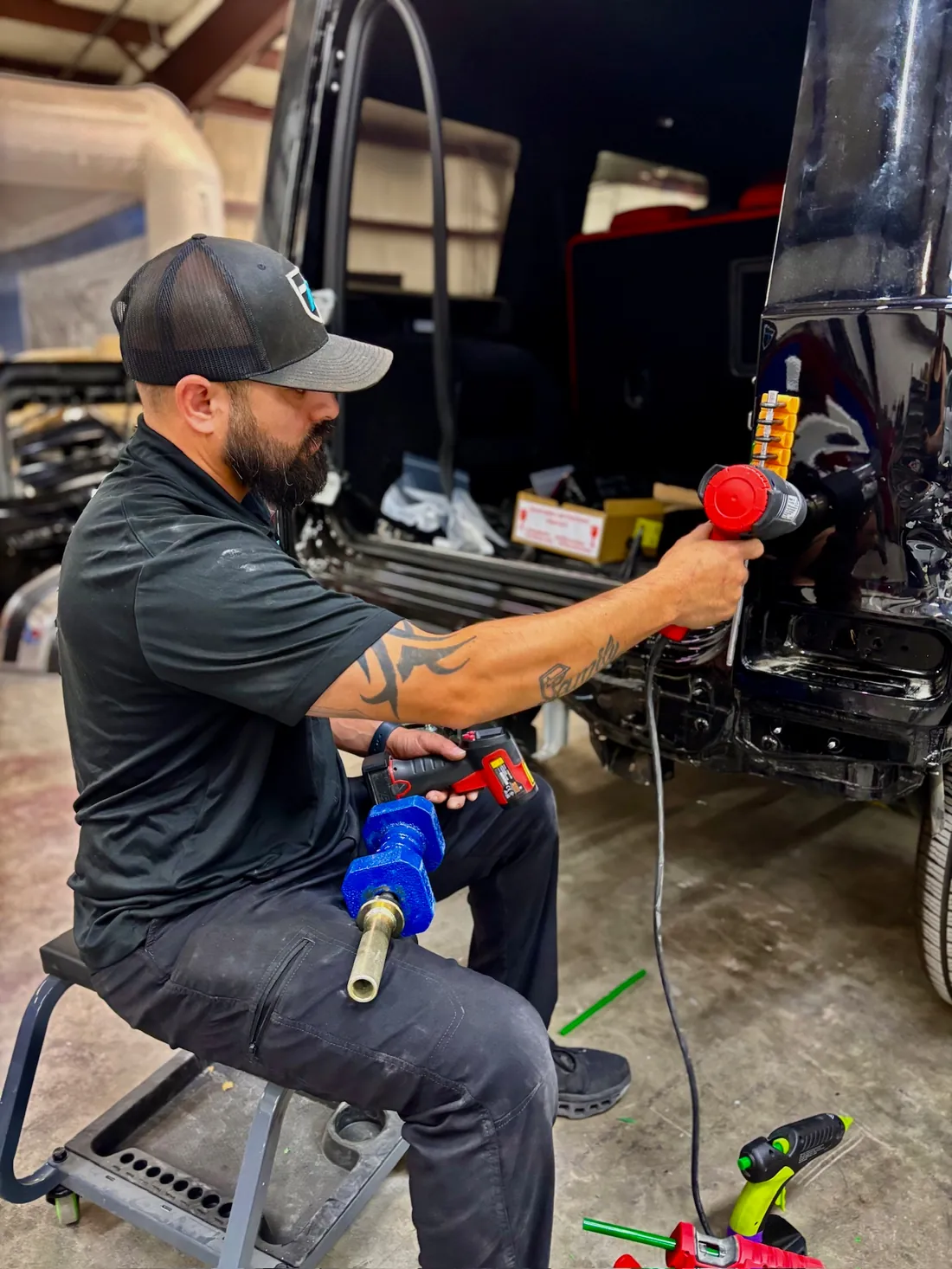
Many EVs use aluminum and mixed materials to offset battery weight. These need specific repair methods and tools, and sometimes a dedicated work area.
Sensors, scans and software
EVs rely heavily on sensors and software. Pre- and post-repair scans, ADAS calibrations and, at times, software updates are part of a complete repair.
What to do after an EV collision
- Move to a safe spot and turn the vehicle off if you can.
- Tell the tow company it's an EV or hybrid.
- Don't park a damaged EV inside a garage until it's been inspected.
- Choose a shop that's trained on high-voltage systems.
Contact us for a free estimate on your EV or hybrid.
Been in an accident?
We'll take it from here.
Get a free written estimate and a clear plan for your repair, with or without an insurance claim.
Fort Worth, TX 76244
Saturday: 10 AM – 4 PM
Sunday: Closed